
This summer, Louisiana landed two of the biggest fertilizer investments in years: a $4 billion low-carbon ammonia plant and the first new US phosphate plant since 1981. Ammonia and phosphate are key ingredients in fertilizer.
Fertilizer prices are among farmers’ largest agricultural input costs and directly impact food costs.
The reasons for these US domestic capital investments aren’t unique to agriculture. They apply to any industry with global supply chains, from retail and e-commerce to pharma, healthcare, automotive, and CPG.
They are part of a growing wave of manufacturers going on the offensive against supply chain risk by bringing production to US soil – again, or for the first time.
Onshoring, keeping one’s business operations within the country, and reshoring, moving activities back to the US from overseas, are growing trends for firms in the new supply chain environment.
In an era where the threat of supply chain disruptions is constant, building US manufacturing capacity has become a strategic imperative for manufacturers serving American B2B or B2C customers.
Supply Chain Leaders Stop Playing Defense and Start Driving Growth
The COVID-19 pandemic caused a multi-layered, interconnected, worldwide supply chain crisis. In the depths of the pandemic, Chief Supply Chain Officers (CSCOs) and their teams were playing defense, wrestling with supply chains exposed to the vulnerabilities of far-flung operating models.
Today, more CSCOs are going on the offense, developing a game plan that establishes or increases domestic sourcing and manufacturing capabilities.
Supply chain leaders see the benefits that onshoring and reshoring can bring by reducing risks from trade tensions, tariff exposure, global energy concerns, geopolitical unrest, and rising foreign labor and transportation costs.
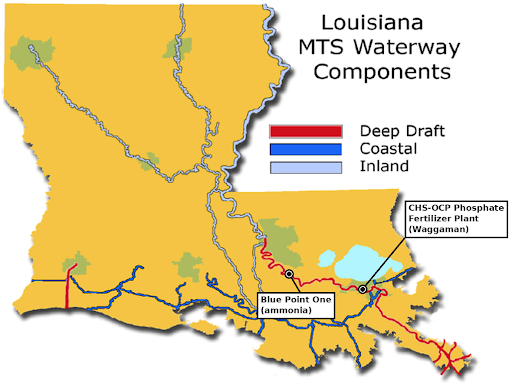
Blue Point Ammonia Facility
Blue Point One broke ground on a low-carbon ammonia facility in Modeste, Louisiana, on the Mississippi River roughly an hour’s drive southeast of the state capital of Baton Rouge.
The $4 billion ammonia plant will be the largest of its kind in the world, producing up to 1.4 million metric tons annually starting in 2029. The facility is expected to create 103 direct jobs with average salaries of $110,000.
The Blue Pointe One facility is a joint venture between CF Industries Holdings Inc., the world’s largest producer of ammonia; JERA Company Inc., Japan’s largest energy company; and Mitsui And Company Ltd., a leading global investment and trading company.
Reshoring ammonia production is part of a broader US Department of Agriculture (USDA) push to unlock millions of tons of new reliable, domestic fertilizer capacity.
The Trump administration has focused on reshoring fertilizer production, reducing reliance on imports, and lowering costs for American farmers. USDA Secretary Brooke Rollins was in attendance at the Blue Pointe One groundbreaking.
CHS-OCP Phosphate Fertilizer Plant
A new $450 million phosphate fertilizer plant will be built in Waggaman, Louisiana, on the Mississippi River near New Orleans, through a 50-50 joint venture between CHS and OCP North America. Minnesota-based CHS is a leading farmer-owned cooperative, and OCP North America is a subsidiary of the Moroccan OCP group.
Announced in September 2026, the plant is expected to produce up to 1.3 million tons of phosphate-based fertilizer a year, and represents the first phosphate plant to be constructed in the US since 1984.
CHS CEO Jay Debertin said that building the plant would solve a
strategic need for farmers: expanding domestic fertilizer production and reducing dependence upon far-flung supply chains for imports. “This investment has the potential to create more value for our owners by bringing fertilizer production closer to the American farmer and the cooperative network,” he said.
“The US uses about 2.5 million tons a year and about 40 to 60 percent of that, depending on the year, is imported. This will cut imports in half,” Debertin said.
The reshoring of both plants is a response to a problem many supply chain leaders are experiencing: critical inputs dependent on a few producing regions and shipping lanes in some of the world’s most volatile regions.
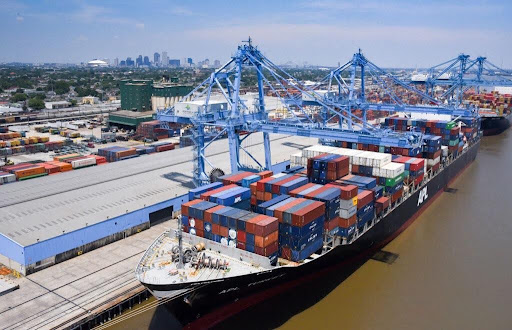
Site Selection: A Reshoring Strategy’s Most Consequential Decision
Site selection is a key component of any strategy for onshoring or reshoring.
New manufacturing sites, whether brownfield or greenfield, must fit the firm’s medium- to long-term supply chain strategy. Sites must also consider the firm’s broader supply webs and demand network.
Where are your customers? Where are your raw material suppliers? Are you investing capital for manufacturing capacity that will be resilient to changes in either upstream or downstream supply chain flows?
Any candidate location must undergo a rigorous review for its overall suitability and favorability relative to other options. Supply chain leaders must weigh costs, including capital expenditures (capex), operating expenses (opex), tax incentives, and operational limitations such as the local labor pools for various skills. They must anticipate how changes in tariffs, immigration, and regulatory schemes will affect operations.
Strategic scenario analysis may establish a clear front-runner among multiple options. It may also reveal benefits of investing in multiple separate regions within the US as a hedge against natural disaster, port risks like strikes, and more.
The Mississippi River is a Unique Resource
Both the Blue Point Ammonia plant and the CHS-OCP Phosphate Fertilizer Plant will be located on the banks of the Mississippi River. This enables ready access to barge transportation, both inbound from suppliers and outbound to customers.
The two new plants will, like much of the US agriculture sector, use the competitive advantage of the US’s inland waterway system. For commodities, riverine barge transportation is cost-competitive to other transportation modes, and results in a smaller carbon footprint.
Barges move cargo 675 ton-miles per gallon of diesel. Rail is 30% less efficient than barge, and trucking is 78% less efficient on a ton-mile basis. This fuel efficiency directly translates to cost savings in today’s record-high diesel prices.
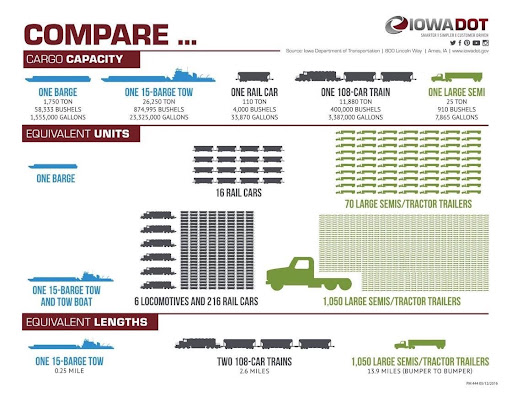
Coastal ports then ship to global destinations. This competitive advantage is the primary reason Louisiana ports ship nearly 50% of America’s grain, and 20% of all US waterborne commerce.
Onshoring and reshoring – a strategic solution for CSCOs seeking to mitigate risks in their supply chain
There are, however, limitations to consider in onshoring or reshoring.
- Some supply chains cannot be fully domesticated because critical materials are only available from one or two locations, entirely outside the US.
- Particularly for low-margin commodities, economics can also limit supply chains. This is the case for certain critical minerals, where domestic sourcing and manufacturing is likely to cost more than the entire global industry is worth.
Despite these limitations, many CSCOs consider reshoring an increasingly attractive way to mitigate supply chain risk.
Many CSCOs now think it is time to “strike while the iron is hot” and reap the advantages of US domestic production by shrinking far-flung sourcing webs.
Seven Forces Making Onshoring and Reshoring Attractive Today
1) Federal and State Policies and Incentives, including tax breaks and subsidies, make stateside manufacturing more financially attractive.
Programs like the Infrastructure Investment and Jobs Act, the Inflation Reduction Act, CHIPS Act, and most recently, the One Big Beautiful Bill Act, make domestic production a more financially viable and secure option for manufacturers across sectors.
2) Interest Rates: Persistently higher key interest rates raise the holding cost of capital, making all inventory more expensive: cycle stock, safety stock, and “break glass in case of emergency” stock.
Shortening supply chains and building US manufacturing capacity closer to the point of customer demand can reduce both finished goods inventory and working capital. These finished goods inventories would otherwise be in-transit for days or weeks from overseas, tying up working capital the entire time.
However, higher interest rates will increase borrowing costs for capital investments in manufacturing capacity. Stronger business cases will be required to justify the investment to corporate CFOs and boards.
In a twist, increased diesel fuel costs can help this justification: by bringing production closer to the point of demand, last-mile transportation expense is reduced. This can at least partially offset the interest-rate headwinds in capex financing.
3) Fuel Prices: Iranian attacks upon tanker ships in the Persian Gulf’s Strait of Hormuz have reduced crude oil transit through the Strait and encouraged expanded pipeline use for Gulf oil producers. However, in October the world’s crude oil supply exceeded demand for the first time since the start of the Iran War, according to the International Energy Agency (IEA).
Although less impactful than the Hormuz closing, Yemeni Houthi attacks upon oil shipping in the Red Sea also reduces global oil supply.
Alongside this rebalancing of crude supply, diesel refining capacity is dramatically reduced due to strikes by Iran on Gulf refineries, by Ukraine on Russian refineries, and by Houthis on Saudi Arabian refineries.
Reduced refining capacity means that even if crude oil is flowing, the outflow of distillate, usable products like gasoline, diesel, and jet fuel are significantly limited. Refinery outages are causing a global crunch in refined distillates, as detailed here by the Federal Reserve Bank of Dallas.
For diesel specifically, this has led to multi-year low stocks and record-high prices (averaging $5.695 a gallon in the US as of November 23, 2026, up $1.864 from a year before, according to the US Energy Information Administration).
Diesel powers about 75% of all commercial vehicles in the US, including nearly all long-haul trucks. Record-high diesel prices drive up the cost of trucking, and are passed into the cost of almost all physical movement of goods, in both B2B and B2C.
4) Supply Chain Resilience: If the COVID-19 pandemic taught manufacturers anything, it was the need to limit exposure to high-impact global disruptions. Reshoring and onshoring reduce, but do not eliminate, this exposure by bringing manufacturing capacity (and to the extent possible, raw materials and WIP) closer to the customer base.
5) Better Availability of Skilled Labor: US domestic labor, while generally more expensive than global alternatives, offer manufacturers an opportunity to close skills gaps. By partnering with local high school vocational programs and community colleges, manufacturers can “home grow” necessary talent into skills that would be difficult to hire on the open market, particularly in rural areas with lower population density.
6) Trade Disputes and Tariffs, particularly with China, escalated during the first and second Trump administrations. Biden retained the Trump-era Section 301 tariffs on China.
While IEEPA tariffs were struck down by the Supreme Court in February 2026 and refunds are occurring, Section 301 tariffs continue even after the large Democratic wins in the recent midterm elections.
It seems unlikely that, no matter the outcome of the remainder of Trump’s second term and the 2028 elections, the federal government will be reluctant to give up a revenue source, particularly given the anti-trade sentiments that are widespread in both major political parties.
Regarding Canadian trade and tariffs, I do not believe that even a party change in the White House in 2028 will drastically turn down the heat between Washington and Ottawa in the governments’ multi-faceted disputes.
Liberal Prime Minister Mark Carney has signaled a turning-away of Canada away from its historic American symbiosis and towards Europe. Canada is seeking to become an “associate member” of the European Union in 2027.
Given all this, we are likely entering a significantly different era in how tariffs are used as a tool of statecraft and industrial policy, as compared to the pre-2016 world.
7) Climate Change and Extreme Weather: From my perspective, this topic requires focusing on operational adaptability and resilience.
While reasonable people can disagree on the severity of climate change impacts and on policy choices, supply chain leaders must first and foremost be realists.
Supply chain leaders should recognize the threat that severe weather poses to infrastructure integrity and manufacturing capacity, and proactively take steps to mitigate those risks.
Spreading production across geographically diverse facilities with multiple suppliers is safer than relying on a single manufacturing site or supplier node.
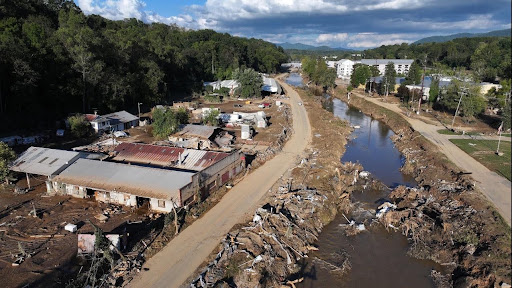
The devastating effects of Hurricane Helene in September 2024 in mountainous western North Carolina demonstrated how weather can cripple a company’s supply chain.
Heavy rains and subsequent flooding at a major hospital-supply manufacturer’s single production facility forced it to curtail production of IV fluids and other critical medical materials for an extended period.
The disruption made existing hospital shortages of saline and other kidney failure treatment solutions much worse.
Read more about this event in my article, The Hidden Cost of Geographic Concentration.
Reshoring the Plants: Five Additional Takeaways for CSCOs
The Blue Point Ammonia facility and the CHS-OCP Phosphate Plant are examples of how reshoring can mitigate supply chain risks for any CSCO.
- Reshoring and onshoring can improve quality control and quality assurance. Geographic proximity lends itself to closer supervision of QC/QA by manufacturing leaders.
- Domestic production shortens the supply chain. CSCOs are looking for ways to reduce the distance between production and customers. Shorter supply chains, faster delivery times, and lower transportation costs improve both customer satisfaction and the bottom line.
- Reshoring can eliminate language barriers, time zone differences, and cultural disconnects that may occur with foreign manufacturers.
- Consumers often view onshoring and reshoring positively, due to job creation and sustained economic growth in US communities.
- There can be greater intellectual property protection when manufacturing in the US, under the auspices of domestic courts.
Thinking about reshoring? We’ll help you make it happen.
Onshoring and reshoring is an increasingly attractive move for US manufacturers. Likewise, there is a growing interest among foreign companies in their foreign investment – by building in the US!
The COVID-era supply chain crises prompted many CSCOs to rethink their supply chain footprint.
More recently, warfare, trade and tariff tensions, global energy concerns, and rising labor and shipping costs are additional incentives driving reshoring and onshoring decisions.
While moving production to the US may be attractive, such high-stakes, long-lasting decisions warrant expert consultation.
That’s where our team at Data Driven Supply Chain can help. We specialize in advising firms on supply chain strategies that account for cost, service, and changing risks.
We offer supply chain network design, network optimization, inventory optimization, forecasting, simulation, and more. We help clients build a long-term supply chain strategy that is informed not just by cost savings, but by adapting to a changing environment.